Key Takeaways
- Men made up 59.6% of Kansas substance use treatment admissions and 68.9% of alcohol-only admissions in 2023, meaning the rooms are already full of men who waited.8
- Shame, self-stigma, masculine norms, and fear of losing a job or license delay treatment, but federal confidentiality rules protect substance use records from employers and licensing boards.
- Kansas offers a full continuum from medically-monitored detox through residential, PHP, IOP, and alumni support, with KDADS funding available for residents under 200% of federal poverty guidelines.10
- Look for gender-responsive programming, Masters-level clinicians paired with peer staff, trauma-informed pacing, and integrated care for veterans and co-occurring conditions before choosing a program.
Why so many Kansas men wait too long to ask for help
If you’re reading this at 11 p.m. after another day of promising yourself you’d stop, you’re not alone in that hallway. You’re actually surrounded, quietly, by other Kansas men doing the same math you are: how bad it’s gotten, how much longer you can hide it, how many more mornings you can pull off before something breaks.
Here’s what the numbers say about the rooms you’re picturing. In 2023, men made up 59.6% of all substance use treatment admissions in Kansas, and 68.9% of alcohol-only admissions. So if the image in your head is a room full of women and one uncomfortable guy in the corner, flip it. The men are already there. They just walked in earlier than you did, or later than they wish they had.8
The harder truth sits underneath that statistic. Admissions data only counts the men who showed up. It doesn’t count the ones still driving home from the liquor store, still refilling the prescription, still telling their wives they’ve got it handled. Research on men and addiction points to the same recurring reasons for that delay: public stigma, self-stigma, shame, the pull of what a man is “supposed” to be, and a simple lack of clear information about what help actually looks like. Men are also two to three times more likely than women to misuse substances in the first place, which means the gap between who needs treatment and who gets it is wider than the admissions chart suggests.1,3
None of that makes you weak. It makes you a man who waited, like most of them do. The next section is about why.

The shame problem no one names out loud
What actually keeps men from picking up the phone
It’s rarely one thing. It’s a stack of quieter things that sit on top of each other until picking up the phone feels heavier than another Tuesday of drinking alone in the garage.
Researchers who looked at why men delay or avoid addiction help kept finding the same five weights, over and over:1
- Public stigma, the fear of being seen as a certain kind of man if anyone finds out.
- Self-stigma, the version of that same judgment you turn on yourself before anyone else gets the chance.
- Shame and low self-esteem, which are different from guilt because they aren’t about what you did, they’re about what you think you now are.
- The pull of hegemonic masculine norms, which is the academic way of saying the story you were handed about what a real man handles on his own.
- A plain lack of information, because most men have never actually seen the inside of a treatment center and are filling the blank with whatever a movie showed them.
Naming them matters. When you can point to the specific weight that’s on you tonight, it stops being a mysterious feeling of “I just can’t” and becomes something smaller and more workable. Maybe yours is mostly the job. Maybe it’s the fear of your father finding out. Maybe it’s that you genuinely don’t know what happens after you make the call.
That last one is fixable in about fifteen minutes. The others take a little longer, but not as long as you think.
The professional man’s specific fear: losing the job, the license, the reputation
If you’re a lawyer, a physician, a pilot, a contractor with employees who depend on you, a teacher, a first responder, or anyone with a license hanging on a wall, the calculation is different. It isn’t just about you. It’s about what happens to the thing you built if the wrong person finds out.
That fear is real, and it’s part of why so many working men wait. Masculine norms already push toward self-reliance and emotional control, and a professional identity doubles down on both. You’ve spent years being the person other people call when something breaks. Being the one who now needs the call feels like a category error.7
The men who protect their careers the longest are usually the ones who ask questions early, not the ones who wait until something breaks in public. Your instinct to protect what you’ve built isn’t the problem. It’s the reason to call sooner.
“I don’t want to sit in a circle and cry”: what treatment actually looks like
Say it out loud if it helps. A lot of men picture treatment as one long confession booth, folding chairs in a circle, a stranger asking how that makes you feel while everyone else waits their turn. That image is doing real damage. It’s keeping men out of rooms that don’t look anything like it.
Here’s the actual shape of a day in most Kansas residential programs. You wake up on a set schedule. You eat with other people, most of them men. You meet one-on-one with a clinician, sometimes a Masters-level therapist, sometimes a medical provider checking how your body is adjusting. There is group work, but the good ones look more like a problem-solving session than a feelings dump. You talk about triggers, work stress, sleep, the fight you had with your wife, what to do when the craving hits at 4 p.m. on a Thursday. You also do things with your hands and your body: exercise, sometimes art or music work, sometimes time with an animal, sometimes yoga if you’re willing. None of it requires you to perform vulnerability on demand.
What makes this tolerable for men who came in skeptical is usually the staff, not the schedule. Programs that hire clinicians and peer support workers with lived recovery experience, meaning people who have been on your side of the desk, tend to feel less like a lecture and more like a conversation. That matters, because research on men and help-seeking is consistent on this point: nonjudgmental, peer-informed environments lower the barrier for men who otherwise wouldn’t stay. A guy who used to drink the way you drink, who now runs groups and can call your bluff when you’re minimizing, is a different experience than a clipboard and a syllabus.7
You will probably cry at some point. Most men do. But it won’t be because someone made you sit in a circle and produce it. It’ll be because you finally stopped carrying something alone, and your body noticed before your pride did.
The Kansas continuum of care, in plain language
Treatment isn’t one thing. It’s a sequence, and knowing the shape of it ahead of time takes a lot of the fear out of the first phone call. SAMHSA’s Treatment Improvement Protocol lays out the standard levels of care, and it also notes that programs for men should be gender-responsive at each stage, not just at intake. Here’s how that sequence actually works in Kansas, step by step.2,11
Medically-monitored detox usually comes first if your body has grown dependent on alcohol, benzos, or opioids. Kansas law defines withdrawal both as the syndrome that hits when you stop and as the pattern of using something else to keep it away. Translation: if you’ve been drinking to stop shaking, detox isn’t optional, and doing it alone can be dangerous. This stage typically runs three to seven days, with medical staff managing symptoms so your body settles safely.
Residential treatment is where the real work starts. At Holland Pathways, the residential program runs about 60 days. You live on campus, follow a structured daily schedule, meet with Masters-level clinicians, and start unpacking what’s underneath the using. Sixty days sounds long. It’s also what most men need to move past the first two weeks of “I feel great, I’ve got this” and into the deeper work that actually holds.
Partial hospitalization (PHP) is the step down. You spend most of your day in treatment but sleep somewhere else, often a sober living house.
Intensive outpatient (IOP) drops the hours further, usually nine to twelve per week, so you can start working again.
Standard outpatient is once a week or so, mostly maintenance.
Aftercare and alumni support is the long tail, the part that keeps you connected to people who remember what year one felt like.
You don’t have to memorize this. But when someone on the phone says “we’d probably start you at residential and step down to PHP,” you’ll know what they’re describing, and you’ll know it isn’t forever.

Trauma-informed care for men, without the overpromise
Why trauma keeps showing up in men’s addiction stories
Ask any experienced clinician what they hear in the first month of a man’s residential stay, and it’s almost never just the drinking or the pills. It’s a car accident he never told anyone about. A stretch of childhood he skips over. A deployment. A friend who didn’t come home. A boss who broke him down for a decade. A marriage that ended in a way he still can’t say out loud.
Trauma exposure is common among people with substance use disorders, and integrated trauma services are associated with better engagement and retention in treatment. In behavioral health settings generally, rates of trauma history among people receiving care are high enough that assuming its presence is safer than assuming its absence. For men specifically, the trouble is that a lot of that trauma never got a name. You didn’t call it trauma. You called it “the thing that happened” and kept moving. Then, five or fifteen years later, you noticed you couldn’t sleep without drinking, or couldn’t feel much of anything without something in your system.5,12
That isn’t weakness. That’s a nervous system that learned to survive by turning the volume down. A trauma-informed program starts from that assumption, which mostly means the staff won’t be surprised by your story, and won’t ask you to hand it over on day one.
What the research actually shows, and what it doesn’t
Honest talk here, because you deserve it. Trauma-informed care for men is promising, not miraculous.
A randomized trial of a trauma-focused group intervention for men in substance use recovery found that participants reported improvements in overall health and were more likely to interact with family and friends supportive of their recovery. The trial also observed that relapse likelihood rose around 100 days after starting the trauma work, and differences from usual care on many outcome measures were modest. SAMHSA’s own advisory notes that the evidence base for trauma-focused approaches is stronger for women and mixed-gender samples than for men specifically. And the broader trauma-informed care literature acknowledges a real gap between the principles and consistent, measurable outcomes.5,6,12
What that means for you, practically: a program that says it’s trauma-informed shouldn’t be selling you a cure. It should be telling you that the staff won’t retraumatize you, that pacing matters, that heavy work happens when you have the support to hold it, not on intake day. Ask how they handle the harder weeks. Ask what happens around day 90 or 100, when the trial suggests risk can spike. A program that has a real answer is one worth calling.
Veterans and dual-diagnosis: two groups Kansas programs often miss
Two kinds of men get shortchanged by generic addiction programs in this state, and both of them tend to know it within a week.
The first is the veteran. If you served, you already know the shape of the problem: the drinking or the pills started as sleep, or as a way to turn the volume down on things you couldn’t say to your wife or your unit. A program that treats the substance without treating what’s underneath it will get you dry for a while, and then lose you around the same point you always lose yourself. Trauma exposure is common in men with substance use disorders, and integrated trauma services are linked to better engagement and retention than treating the two things in separate rooms. Holland Pathways runs specialized programming for veterans on the same campus as its general residential track, which matters because you’re not the only guy in the building carrying something like this.12
The second is the dual-diagnosis man. Depression, anxiety, PTSD, bipolar disorder, sometimes all of it braided together with the drinking or using. Standard advice used to be “get sober first, then we’ll look at the mental health.” That order has been backwards for a long time. Behavioral health research consistently finds high rates of trauma and co-occurring conditions among people in SUD care, which is why integrated treatment, addressing both at once with Masters-level clinicians, holds up better than the old handoff model. If a program can’t tell you clearly how they treat both, keep calling.5
How Kansas pays for treatment when insurance isn’t the answer
Money is often the excuse men give themselves for waiting another month. Sometimes it’s a real barrier. Sometimes it’s the last acceptable reason to hide behind. Either way, it helps to know what actually exists.
If you have private insurance through your job, most Kansas residential and outpatient providers will run a benefits check for you before you commit to anything. That call is free, and it doesn’t obligate you to admit. If you’re uninsured or underinsured, Kansas funds a separate track through the Kansas Department for Aging and Disability Services (KDADS). To qualify for KDADS Behavioral Health Services funding, you need to:10
- Be a Kansas resident,
- Have income below 200% of the federal poverty guidelines, and
- Have no other means of paying for care.
That funding covers social detox, residential, and outpatient services across the state.
One honest note: KDADS prioritizes pregnant women, women with children, and adolescents, so adult men sometimes wait longer for a state-funded bed. That doesn’t mean you don’t qualify. It means asking early matters. Call, get on a list, and keep working the phone while you wait.10
What to look for in a residential program built for men
Once you accept that you’re actually going to make the call, the next question is which door to walk through. Not every program that lists “men’s track” on its website has actually built one. Here’s what separates a real male-responsive program from a coed schedule with the pronoun changed.2,7,12
Gender-responsive by design, not by accident. SAMHSA’s own consensus guidance says treatment for men should account for the impact of gender on use, abuse, and recovery, and should examine the role of masculinity directly, not treat it as background noise. Ask the intake coordinator how their groups address self-reliance, anger, work identity, and fatherhood. If the answer is vague, keep looking.
Masters-level clinicians paired with staff in recovery. The clinical side handles the diagnosis, the medication, the co-occurring depression or PTSD. The peer side handles the part where you need someone who’s been in your seat to tell you your rationalizations are boring. Men in nonjudgmental, peer-informed settings are more likely to stay, and staying is most of the game.
Trauma-informed pacing. Not “tell us everything on day two.” A program that understands trauma is common in men with SUD will let the harder work show up when you’re ready to hold it.
A real step-down plan. Residential is a starting line. Ask what PHP, IOP, and alumni support look like before you admit, not after.
Holland Pathways in Wichita: a closer look
Since you’ve read this far, here’s the specific place this article has been quietly pointing toward. Holland Pathways runs a 64-bed addiction treatment campus in Wichita, and it’s built around the exact tension this article keeps naming: men who need medical rigor but can’t tolerate an environment that feels like a lecture hall.
The full continuum lives on one campus. Medically-monitored detox, a 60-day residential program, partial hospitalization, intensive outpatient, standard outpatient, and alumni support. Masters-level clinicians handle the diagnostic and therapy side, including co-occurring depression, anxiety, PTSD, and bipolar disorder. Roughly a quarter of the men on campus are veterans, and specialized programming runs alongside the general track, so if you served, you won’t be the only one in the room carrying that.
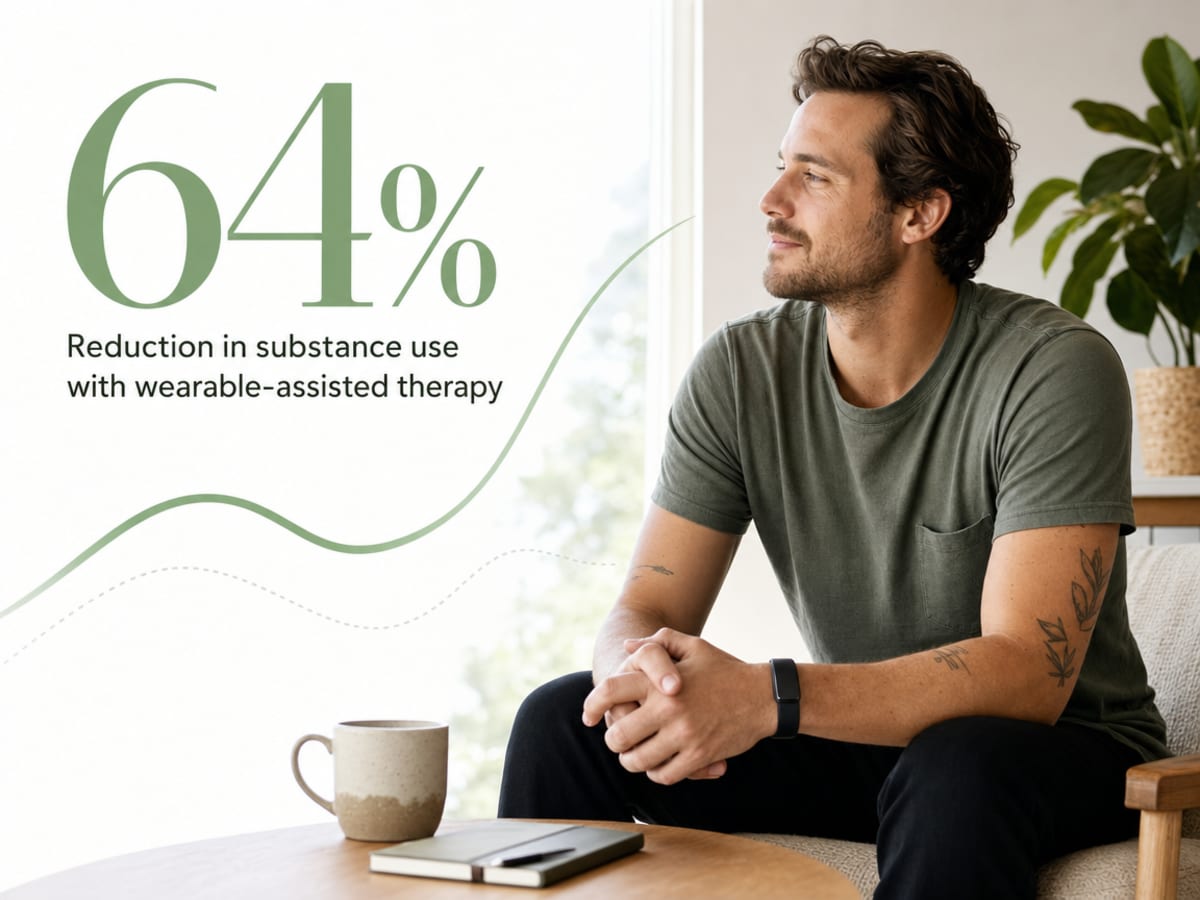
Two details matter for men who’ve talked themselves out of calling before. Staff include people with lived recovery experience, which is the peer-informed setting research keeps linking to men actually staying. And the program integrates wearable data from Huml Health, tracking sleep, stress, and heart rate so clinicians can adjust care based on what your body is actually doing, not just what you say in group. Trauma-informed pacing runs through all of it, which matters because trauma is common in men with SUD and integrated care improves engagement.7,12

Making the first call without committing to anything
Here’s the part most articles skip. You don’t have to decide anything on the first call. You don’t have to admit that day, that week, or that month. You don’t have to give your full name if you’re not ready. You’re allowed to call and just ask questions.
A useful first call sounds like this: what does your intake process actually look like, how do you handle confidentiality, do you have men with lived recovery experience on staff, what happens if I need detox, and how do you work with veterans or co-occurring conditions? Take notes. Hang up. Sit with it. Call back tomorrow if you need to.
If you want to start with Holland Pathways in Wichita, that’s the door this article has been pointing at. One call. No commitment. Just information, from someone who’s answered this exact question from someone who sounded a lot like you.
Ready to Talk? Start Your Recovery Call
Connect privately with someone who truly understands and begin building your personalized recovery plan today.
Frequently Asked Questions
Will my employer or licensing board find out if I go to residential treatment in Kansas?
Not from the treatment center. Substance use records are protected under strict federal confidentiality rules, and reputable Kansas providers do not contact employers, licensing boards, or family members without your written permission. Any disclosure decision is yours, on your timeline. If you use FMLA or an employee assistance program, that involves separate paperwork you control.
Do I have to hit rock bottom before I qualify for men’s addiction treatment?
No. That myth keeps men sick longer than anything else. If your use is affecting your sleep, your work, your marriage, or your body, you already qualify for a conversation. The men who protect the most are usually the ones who called before something visible broke, not after.
What if I can’t afford treatment and don’t have insurance?
Kansas funds a separate track through KDADS Behavioral Health Services. If you’re a Kansas resident, earn less than 200% of the federal poverty guidelines, and have no other means to pay, you can qualify for state-supported detox, residential, and outpatient care. Adult men sometimes wait longer for a bed since KDADS prioritizes pregnant women, mothers, and adolescents, so call early.10
How long does residential treatment actually take, and what happens after?
At Holland Pathways, residential runs about 60 days. That’s long enough to move past the first two weeks of feeling great and into the work that holds. After residential, you step down through partial hospitalization, then intensive outpatient (usually nine to twelve hours a week so you can work), then standard outpatient, then alumni support. The full arc is months, not years.
I’m a veteran with PTSD and drinking. Can one program handle both?
Yes, and it should. Treating the drinking without treating the PTSD underneath is the old handoff model, and it keeps losing veterans. Integrated trauma services are linked to better engagement and retention than treating them separately. Holland Pathways runs specialized programming for veterans on the same Wichita campus, with Masters-level clinicians handling co-occurring PTSD, depression, anxiety, and bipolar disorder.12
What happens on the first phone call to Holland Pathways?
Someone answers, usually a person who has answered this exact call from someone who sounded a lot like you. You can ask questions without giving your full name. They’ll walk you through intake, confidentiality, insurance or KDADS options, detox, and what residential actually looks like day to day. You don’t have to commit to anything on that call.
References
- Patterns and Challenges in Help-Seeking for Addiction among Men. https://pmc.ncbi.nlm.nih.gov/articles/PMC11508344/
- Treatment Modalities and Settings (Treatment Improvement Protocol). https://www.ncbi.nlm.nih.gov/books/NBK144286/
- Males and Mental Health Stigma. https://pmc.ncbi.nlm.nih.gov/articles/PMC7444121/
- Gender Differences in Substance Use Disorders and Treatment Outcomes. https://www.ncbi.nlm.nih.gov/pmc/articles/PMC6407857/
- Trauma-Informed Care in Behavioral Health Services. https://www.ncbi.nlm.nih.gov/pmc/articles/PMC6224483/
- Trauma Treatment for Men in Recovery for Substance Use Disorders: A Randomized Clinical Trial. https://www.ojp.gov/ncjrs/virtual-library/abstracts/trauma-treatment-men-recovery-substance-use-disorders-randomized
- Men, Masculinity, and Help-Seeking: Implications for Mental Health and Substance Use. https://www.ncbi.nlm.nih.gov/pmc/articles/PMC5596952/
- 2023 TEDS-A Kansas | CBHSQ Data. https://www.samhsa.gov/data/node/51056
- Kansas Statute 75-53-75. https://www.kslegislature.gov/li/b2025_26/statute/075_000_0000_chapter/075_053_0000_article/075_053_0075_section/075_053_0075_k/
- 0601 Kansas Department for Aging and Disability Services (KDADS) Behavioral Health Services for Addiction and Recovery. https://content.dcf.ks.gov/pps/robohelp/PPMGenerate/PPS_Policies/0000_General_Information/0601_Kansas_Department_for_Aging_and_Disability_Services_(KDADS)_Behavioral_Health_Services_(BHS)_for_Addiction_and_Recovery.htm
- 2026 Kansas Statutes – 65-4024a. https://www.kslegislature.gov/b2025_26/laws/065_000_0000_chapter/065_040_0000_article/065_040_0024a_section/065_040_0024a_k/
- Substance Abuse Treatment and Trauma – SAMHSA Advisory. https://store.samhsa.gov/sites/default/files/d7/priv/sma14-4816.pdf